Kaifeng, Henan Province -- Page 2

City of Kaifeng -- (Translation -- The Open Peak)
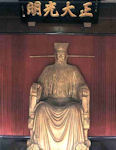
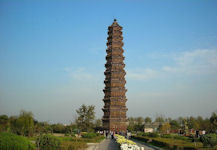
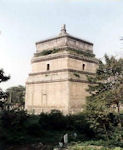
Bao Gong Iron Tower Fan Tower

Kaifeng is located in eastern Henan Province, a few kilometers south of the Yellow River and east of the provincial capital, Zhengzhou. Unlike most other Chinese cities, its population has increased little in recent decades (from 280,000 in 1923 to about 340,000 in 1989). Kaifeng is known for its fine silks and embroidery work. It is also a commercial center serving the Hubei Plains region to the east. New industry has been developed here since 1949, including electrical, chemical, and agricultural machinery plants, and flour and edible oil processing mills. Winters in Kaifeng are cold and dry, while summers are hot and wet. Spring and autumn are the best times to visit.

Temple Iron Tower Fan Tower
Kaifeng in History

Kaifeng served as the capital of the State of Wei (220-265) and later as the capital of China during the Five Dynasties period (907-960). It achieved its greatest fame, however, under the Northern Song (960-1127), when it became an elegant and prosperous city. It was laid out in three concentric circles -- an Imperial City, Inner City, and outer City --- a pattern later replicated in rectangular form by the Yuan Emperors in Beijing. Canals were built alongside its merchant arcades and filled with lotus blossoms.

Kaifeng was pillaged by invading Jin in 1127 and was never restored. Today all that remains of its former magnificence is a scroll painted by Zhang Zeduan (now in the Imperial Palace in Beijing) depicting the busy town center.

During the Jin Dynasty (1115-1234), a sizable Jewish population of Mediterranean origin, who migrated to China in about the 7th century, moved to Kaifeng from Hangzhou. Jewish merchants and bankers wielded significant influence in the city during the 14th and 15th centuries, when they numbered over 1000. Three important stelae in the town, dated 1489, 1512, and 1619, memorialize the presence of this community. By the late 19th century, the Jewish population in Kaifeng all but ceased to exist. In the 1980s, only a handful of elderly survivors -- with only tenuous recollections of their Jewish roots -- could be found in the city.

In 1644, attempting to defend Kaifeng against the invading Manchus, the city elders opened the dikes of the Yellow River. A disastrous flood resulted, killing over 300,000 people. Indeed, the constant flooding of the Yellow River has always been a problem here, and may explain why Kaifeng never became a major industrial center. Today, Kaifeng is 53 feet below the bottom of the Yellow River.