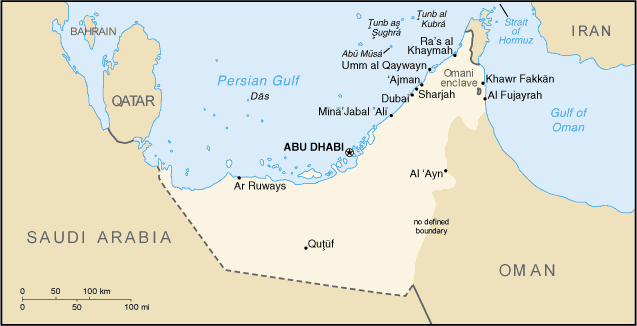
A Map of United Arab Emirates Go to Detail Map and Info on United Arab Emirates

United Arab Emirates

Background: The Trucial States of the Persian Gulf coast granted the UK control of their defense and foreign affairs in 19th century treaties. In 1971, six of these states - Abu Zaby, 'Ajman, Al Fujayrah, Ash Shariqah, Dubayy, and Umm al Qaywayn - merged to form the UAE. Ra's Al Khaymah joined them in 1972. The UAE's per capita GDP is not far below those of the leading West European nations.
Location: Middle East, bordering the Gulf of Oman and the Persian Gulf, between Oman and Saudi Arabia. Area: Total:  82,880 sq km. Area - comparative: Slightly smaller than Maine. Land boundaries: Total:  867 km, border countries:  Oman 410 km, Saudi Arabia 457 km. Coastline: 1,318 km.

Return to Visiting Locations
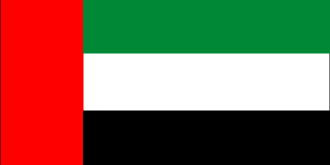
 Flag for United Arab Emirates

Climate and Terrain: Desert; cooler in eastern mountains. Flat, barren coastal plain merging into rolling sand dunes of vast desert wasteland; mountains in east. Elevation extremes: lowest point:  Persian Gulf 0 m, highest point:  Jabal Yibir 1,527 m. Land use: Arable land:  0%, forests and woodland:  0%.
People: Population: 2,407,460, note:  includes 1,576,472 non-nationals. Ethnic groups: Emirati 19%, other Arab and Iranian 23%, South Asian 50%, other expatriates (includes Westerners and East Asians) 8%, note:  less than 20% are UAE citizens. Religions: Muslim 96% (Shi'a 16%), Christian, Hindu, and other 4%. Languages: Arabic (official), Persian, English, Hindi, Urdu.
Government: Government type: Federation with specified powers delegated to the UAE federal government and other powers reserved to member emirates. Capital: Abu Dhabi.

Economy overview: The UAE has an open economy with a high per capita income and a sizable annual trade surplus. Its wealth is based on oil and gas output (about 33% of GDP), and the fortunes of the economy fluctuate with the prices of those commodities. Since 1973, the UAE has undergone a profound transformation from an impoverished region of small desert principalities to a modern state with a high standard of living. At present levels of production, oil and gas reserves should last for more than 100 years.
Statistics: Telephones - main lines in use: 915,223. Telephones - mobile cellular: 1 million. Radio broadcast stations: AM 13, FM 7, shortwave 2. Television broadcast stations: 15. Internet country code: .ae Internet users: 400,000. Railways: 0 km. Highways: Total:  4,835 km, all paved. Airports - paved runways: 22, unpaved runways: 18.