|
Birds Habitat Generalists - Page 2
It is hard to imagine a native North American species with as broad a niche as
the house Sparrow, but the niche of the
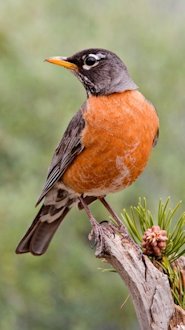
American Robin
may exceed it in some
ways. The House Sparrow, though more adaptable in terms of food and nest site,
is never far from human habitation; the Robin is at home in urban areas and
wilderness forest. Other notable North American generalists include the
Northern Mockingbird, the Common Grackle, crows, and jays.
The American Robin's diet generally consists of around 40 percent
invertebrates, such as earthworms, beetle grubs, caterpillars and grasshoppers,
and 60 percent wild and cultivated fruits and berries. They will flock to
fermented Pyracantha berries, and in sufficient quantities will exhibit
intoxicated behavior such as falling over while walking. It forages primarily
on the ground for soft-bodied invertebrates, and finds worms by sight, pouncing
on them and then pulling them up. Nestlings are fed mainly on worms and
other soft-bodied animal prey. In some areas, Robins, particularly of the
coastal race T. m. caurinus will feed on beaches, taking insects and small
mollusks.
|