|
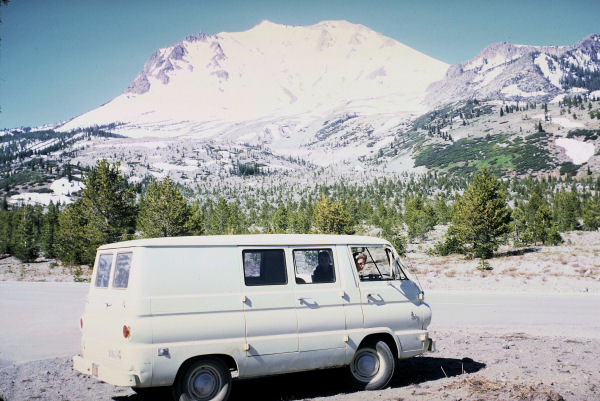
Mount Lassen National Park 2. Our White Van Lassen Peak began as a volcanic vent on Mount Tehama's northern flank. Considered the world's largest plug dome volcano, it rises 2,000 feet to an elevation of 10,457 feet. The peaks lava came from many veins. Recent geological evidence indicates that Cinder Cone, also a volcano, erupted in the 18th century. How do landscapes recover from volcanic eruptions? That question, asked anew since Mount Saint Helens erupted in 1980, has been answered for more than 70 years - since Lassen Peak quieted down. The Devastated Area most visibly illustrates the slow but relentless return of Earth's green mantle of plants, but many areas of the park is important post-volcanism plant succession sites. ⇦ Back to Page 1 On to Page 3 ⇨Hi-Res Pic (179K) Return to Mt. Lassen -- Page 1 |
| The devastated Area of Lassen Volcanic National Park |