|
Chinese Forces Logistical Problem in Korea - Page 2
Changes Made
To address the urgent shortfalls, the Central Military Commission directed the
Northeast Military Command to hold a special logistics meeting in early 1951.
This convened on January 22-30 in Shenyang, and resulted in several
improvements in ground and rail transportation support to the war.
But problems continued. In May 1951, Peng sent Deputy Commander Hong Xuezhi to
Beijing to urge that an operational unified logistics command be set up to
direct all support, including protection of supply lines. The military
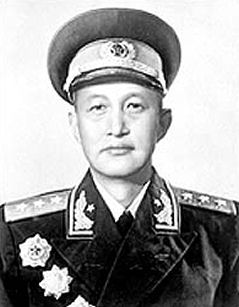
leadership agreed, but to his dismay, Hong was selected the CPV logistics
commander. He, like many revolutionary veterans at the time, disdained
logistics.
During the war, China's power projection and support capabilities sufficiently developed to support one million soldiers and underwrite an operational stalemate against a modern, advanced opponent outside China's territory. Huang Gezheng, a protégé of Peng Dehuai, served as the Director of the General Rear Services Department (GRSD) from 1954 to 1956. After the war, Hong Xuezhi, also closely associated with Peng, became the GRSD director in 1956, while Huang was promoted to Chief of the General Staff. ⇦ Back to Page 1 Return to Korean War Choices On to Page 3 ⇨ |
| General Hong Xuezhi |