|
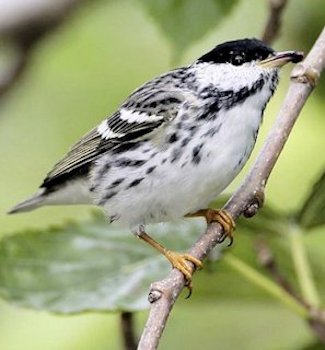
Land Bird Migration It is a common misconception that many of our North American summer land birds go to South America in the winter. A few do so -- Swainson's and Grey-cheeked Thrushes, Bobolinks, Northern Waterthrushes, and Blackpoll Warblers -- but most travel only as far as Mexico, Central America, and the Caribbean. Birds that can eat seeds do not need to migrate even that far because their food is generally more abundant. Many species of sparrow, junco, towhee, and longspur stay within the United States, migrating only as far as it is necessary to find winter weather that is less severe. Most individuals migrate only a few hundred to a thousand miles, and in some cases the northern edge of the winter range overlaps the southern part of their nesting area. When raising young, most of these birds augment their diets by harvesting insects. In winter, however, they feed almost entirely on small seeds. Unlike water birds, most small land birds do not migrate in compact flocks, but in summer they nest in dispersed territories, each occupied by a single pair. Most summer land birds migrate at night. The Blackpoll Warbler is a very remarkable traveler. Weighing in at about 20 grams, this bird performs an over-water flight from New England to the coast of South America, flying at only 25 miles per hour. The bird takes three to four days to make the trip. Migration Paths of the Blackpoll Warbler ⇦Return to Bird Migration and Navigation |
| Blackpoll Warbler |